Showing posts with label brain development. Show all posts

Friday, September 22, 2017

The Amazing Effects of Art on the Brain

Happy Fall!


I have written many times about the benefits of dance, from its accessibility; to development of social and emotional skills; to development of coordination, body awareness, discipline, correct posture, balance, flexibility, and strength; to teaching academic subjects kinesthetically; to simply allowing children the opportunity to experience the joy of movement. 

Many of these same benefits to other art forms.


I have also written about the benefits of dance on the brain.  I am excited and amazed at all of the positive news that comes out virtually every day on this subject.  I am devoting this blog to a very interesting one that just came out a few days ago:


This is Your Brain on Art (link below), by Sarah L. Kaufman, Dani Player, Jayne Orenstein, May-Ying Lam, Elizabeth Hart, and Sally Tan, published September 18, 2017, in The Washington Post.  Complete with beautiful music and video, this article explains "how the new field of neuroaesthetics is probing the relationship between art and the brain."  

Some of the authors' findings include:


  • Art provides social connection, which is a key function of our brains 
  • The value of and need for story-telling
  • How our brain and sensory system react to movement
  •  "The logic of art is a neural turn-on"  


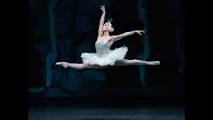
Intrigued?  You won't be disappointed.  The article takes you through the story of Swan Lake, with videos of gorgeous dancing and the lovely music of Tchaikovsky in the background, as it explains why exposure to art is so important for the development and maintenance of a healthy brain. 


Click below to visit this fascinating world:


This Is Your Brain on Art                      Enjoy!


MOVING IS LEARNING!
Keep on Dancin',

Connie


https://www.scbwi.org/members-public/connie-dow

Monday, February 1, 2016

SCECA: Dr. Pam Schiller and SINGING Brain Research!

Dr. Pam Schiller and Debbie Clement

FEBRUARY!
I am just back home in postcard sunny Florida, 
from a five day road trip up to South Carolina. 

I had the opportunity to give the Friday keynote at SCECA. 
Here's a little peak at the space before 
all 1300 dedicated ECE teachers arrived. 


My nerves are always about the technology. 
I'm thrilled to tell you that EVERYthing 
went swimmingly: Diva head-wrap mic and all! 

This is one of my favorite new-to-me quotes that I shared. 


SCECA is one of the most packed events that I've ever presented. 
There was an entire track of workshops daily at 7:00 A.M. 

That's the slot that I had on Saturday. 
To make a long story short...... 
In order to be more efficient with the BIG stage and transitions between presentations, 
I ended up offering my laptop to Dr. Pam Schiller -- 
since I was on the big stage right before her Saturday keynote. 
{That's the two of us together in the opening photo up top.} 

She uploaded her power point onto my laptop. 
She very generously offered an overview of her slides to our readership.

I just absolutely am thrilled that Dr. Pam's 
NUMBER ONE
tip for brain based learning is to SING!  


Dr. Pam spoke at length about providing a classroom with the proper amount of stimulation. 
From an optimal brain and optimal focus strategy, 
she spoke of the detriment of classrooms that are TOO much and how the young child can be overwhelmed by walls covered in information. 


I especially appreciated her point of having the necessary information 
(on the walls) 
for the lesson at hand. 

Her fifth point is fairly self explanatory. 
Having a 'formula' for expectations for 'focus time'
is a HUGE help. 

I have seen all together too many 'circle times' that are designed around a twenty minute time block --
for children four years old.
#TooMuch 

Having show and tell, calendar, jobs etc etc etc 
can go w-a-y past the optimal one minute per year, times three. 


As a lover of color, 
I thought I'd also include her #8 tip on the use of color. 
This ties in very closely with #4 above on proper use of stimulation. 


One of my favorite things about presenting at conferences, 
is the opportunity to mix and mingle and catch up with the other presenters. 
Dr. Pam has such a BIG heart and I learn from her -- 
every time we are together! 
Thanks again for the use of your slides for our readers here, Pam. 


On a personal note, 
we got to stop through my parents in Augusta, GA 
going north and returning south. 

My parents each had a birthday last month, 
so we were able to celebrate together. 
#BLESSED 

My Orlando school visit: sharing my fabric quilt and my book's illustration 


Until next month! 
Debbie Clement


Tuesday, October 22, 2013

It's Official -- Dance in School Can Produce Smarter Kids!

It's Official: DANCE can Produce Smarter Students ~~ Research at PreK+K Sharing


Hello ECE Community, 


Some recent studies have documented that dance can help children learn and produce smarter kids.  Dance offers a double punch, as it is both a lively physical activity and a creative art form.  I don't usually quote an entire article for my blog post, but this news is exciting and important. There are links after this article to other research I have come across that reaped similar results.   


Young Children Benefit from Dance: Research at PreK+K Sharing
How Learning Dance in School Can Produce Smarter Kids

Only “43 percent of all public elementary schools and only 14 percent of secondary schools offer any instruction in dance,” according to Carmen Carter‟s 2004 study published by the University of Florida. Instead, teachers focus on science, math, and English, often leaving out the arts. This is partly because, according to Serin Ngai, these subjects are measurable on state achievement tests, and students‟ high scores lead to higher school district funding.

It makes sense that under-funded teachers design lessons to increase students‟ test scores, but it shows a disturbing skew in kids‟ education. Subjects such as the arts have had huge budget cuts; many schools have cut them entirely to fund test prep courses in math, science, and English. Unfortunately, studies have shown that students who learn to dance in school have significant advantages: high grades and higher SAT scores, compared to students without dance lessons.

Dance Lessons Help Kids Learn Other Subjects
Multiple sources show that dance in schools relates to increased mental ability and high grades. In MacDonald‟s study, elementary school teachers worked dance into their lessons on math, history, and other subjects. Teachers in this study said, “children responded to creative dance with an intensity, concentration, „ownership,‟ and enthusiasm they did not usually see in children‟s educational activities.” Teachers found that it was relatively easy to use dance to teach many subject areas, and were “astonished at the possibilities it offered.”
Using dance to teach standard subjects allows students to have fun with the material, but also helps them gain a deeper understanding of concepts by approaching them from new angles. Cognitive scientists, such as Patricia Alexander, agree that the understanding of concepts‟ underlying truths is the mark of expert-level knowledge. When students are given multiple ways of understanding a concept, they are better able to deeply grasp the underlying principles.

Dance in School Makes Kids Smarter
Dance‟s mental benefits are clear, both when taught with other subjects and when taught alone. Cognitive generalization means that a learned skill in one area expands to skills in many other areas. For example, when students scan an essay for spelling errors, this improves their ability to recognize errors in other visual patterns, such as rows in an accounting spreadsheet, or in a piece of sheet music. In the same way, dance lessons give students important cognitive skills that boost their ability in many other subject areas.
In addition to the overlaps with other subjects, learning dance in school can lead to high grades through an overall increase in mental ability. In dance class, Carter explains, students practice physical exercises that “„stimulate mental alertness, modeling, sequencing, attention to detail, and memorization skills‟... —thereby promoting the learning process.” When kids learn to dance, they learn important skills, like how to pick up new ideas quickly, to pay attention to small details, and to focus on the task at hand.

Four studies in the REAP (Reviewing Education and the Arts Program) report showed a relationship between dance in school and improved reading skills. Another three REAP studies showed that dance lessons improved nonverbal reasoning, which includes math and mechanical ability. This makes sense when you look at the overlap between dance and other school subjects, as Carter explains: “...the spatial designs and angles of the body are expressed with geometric terms; an understanding of anatomy and physics are needed to properly negotiate the body in space with proper technique and alignment...and the most apparent conception is that dance is language-like...Writing a book is similar to the process of making a dance...The art of choreography can be simply defined as composition of movement.”

Learning to Dance Leads to Higher Grades & SAT Scores

The positive effects of dance on students‟ grades are shown in various scientific studies. In a controlled study of high school students, there was a statistically significant difference in the grades of dancer and non-dancer groups. The dancers‟ overall Grade Point Average was 3.22, while the non-dancer group averaged a 2.87. This equates to the difference between a B+ and a B-.


Non-dancers average two grade scales below students who have dance lessons; these students, if they had access to dance in school, could do much better. Dancers‟ high grades suggest to Carter that “dancers are able to manage themselves better in a variety of academic situations, have higher levels of self-discipline, and have better coping skills thereby achieving higher academic success.

The positive effects of dance in school go beyond high GPA into standardized testing. According to Carter, “the College Board revealed that students who take arts courses tend to score higher on the Scholastic Aptitude Test (SAT) than those who do not,” and are more likely to be successful in college.

Both Students & Teachers Need Dance in School
Now that we know that dance in school leads to smart kids, high grades, and high SAT scores, it would be wise for teachers to include more dance lessons. Instead of shortchanging kids by limiting lessons to test preparation, including dance the curriculum would help both students and teachers. It would give students the advantages mentioned above, and it would help teachers by improving students‟ overall academic performance, test scores, and by extension, district funding. With benefits to both students and teachers in mind, the data is clear: We need dance in school."

Sources

Alexander, Patricia A. “Can We Get There from Here?” Educational Researcher 32.8 (2003): 3-4. SAGE Publications. Web. Braaksma, Martine A.H., Gert Rijlaarsdam, Huub Van Den Bergh, and Bernadette H.A.M. Van Hout-Walters. “Observational Learning and Its Effects on the Orchestration of Writing Processes.” Cognition and Instruction 22.1 (2004): 1-36. Informaworld. Taylor & Francis Group. Web.
Carter, Carmen S. Effects of Formal Dance Training and Education on Student Performance, Perceived Wellness, and Self-concept in High School Students. Diss. University of Florida, 2004. Web. MacDonald, Colla J. “Creative Dance in Elementary Schools: a Theoretical and Practical Justification.” Canadian Journal of Education (1991). JSTOR. Web.
Ngai, Serin. “Painting over the Arts: How the No Child Left behind Act Fails to Provide Children with a High- Quality Education.” Seattle Journal for Social Justice 4 (2006): 657. Web.

More links that address the benefits of dance in school:


http://well.blogs.nytimes.com/2013/09/18/how-physical-fitness-may-promote-school-success/?partner=rss&emc=rss


Benefits of Dance for Students Research at PreK+K Sharing

So, keep on dancin'!
MOVING IS LEARNING!

Connie Bergstein Dow
www.movingislearning.com

Sunday, June 2, 2013

BRILLIANCE FOR EVERYONE and Resources to make it happen!

By Deborah McNelis, Founder/Brain Insights

It is with mixed emotions that I contribute this final post to PreK and K Sharing. It has been EXTREMELY wonderful to be a part of this fabulous resource along with the amazingly talented authors that contribute!!
Brilliant Brains for Everyone- Prek and K sharing

It is with heartfelt thanks to Debbie Clement for creating this blog, to every one of the contributors and to all of the readers for making a difference in the lives of children everyday!!!

How FUN it is to see the post yesterday announcing the 1,000th follower!!!  SO, I join Debbie in continuing this CELEBRATION also with a valuable giveawy!!  Simply comment below and you will be entered to win a Brain Development Activity Packet of your choice in English or Spanish!!! The random drawing will take place on June 14th!


The mixed emotions I feel are due to the great pleasure it has been to be a part of this from the beginning, combined with the great excitement for many NEW ways to make positive things happen for children!!


As you have maybe already heard me say, the goal of the company, Brain Insights, is to make Early Brain Development common knowledge. It is my deep desire to ensure that the essential information on the basics of what maturing brains need is understood by ....... EVERYONE!!

We not only need parents, grandparents, early childhood educators and people working directly with children to understand this. The children are counting on EVERY adult to know what they need most!!!  We need, the medical community, school boards and administrators, employers and business leaders, community leaders and politicians.... EVERYONE to understand and support the optimal development of every child. As, I frequently say,


"WE ALL benefit when ALL children have well developed brains!"

There is Brilliance within ALL children www.braininsightsnow.com

 With this passion, in this last post, I share with you several ways we can all continue to be a part of making this finally happen!!  Each of us is BRILLIANT and each child also has BRILLIANCE within!

When I use the word brilliance I am not only talking about intelligence. Of course this is an extremely important part of it, but I also mean much more than being smart. I mean the brilliance that is within each one of us. I am referring to all that makes each one of us a unique individual. It is my dream to have EVERY one of us fully shine. The world needs your BRILLIANCE!


I suggest we simply do 3 things for ourselves and our children to promote greater 
Brilliance in the World!!

  • Continue to learn from each other and share with one another!
  • Come together to create a bigger voice!
  • Acknowledge all the positive things you are doing EVERY day!!


In achieving this effort, a new site called, Brain Insights Now has been created!!!!  This is one of the many new things I am so enthused to share with you!!!  This community of people coming together to share brilliance, would be SO honored to have you join in! 

There are NUMEROUS benefits....  Weekly insights with a related article, brilliance bits and a video clip are all available FREE!!! or As a VIP member you receive a FREE Loving A Baby printable poster. And each month a new printable is available to share in newsletters, use for parent involvement, or post on bulletin boards!  In addition, you will get to enjoy recent articles and interviews from world wide experts, referrals to valuable resources, implementation ideas, and of course inspiration! Also, there is the wonderful opportunity for you to contribute, benefit from and share in the, Creating Great Connections Forum!  

AND..... there will also be a Brain Insights Presentation available !! Since not everyone can afford an in person presentation, this is a way for you to easily enjoy and benefit from a new Brain Insights presentation!  It is perfect for parents, lunch and learns, and staff meetings!

For further information on how you will definitely benefit, these kids will share and answer your questions!

It is through people like you coming together that we can FINALLY make it happen ... to have ALL children experiencing what their young developing brains really need! We can support ways to help EVERY child shine!!

This week, Gill Connell, from Moving Smart wrote a wonderful blog post that I plan to share everywhere!!  It is titled, "Academic Creep". It is one that contains an important message that many of you will also want to share as well. This post explains in large part why a site like Brain Insights Now is needed and why we need great numbers of people coming together to share this understanding!!!! The children are counting on us!

With that thought in mind I close with a list of 10 resources that all contribute to promoting brilliance in children:

Inspired Children  Book by Dr. Rosina McAlpine

Bloom  Brand New e-book by Wendy Young and Dr. Lynne Kenney 

My Feelings Are Hungry Children's book by Ava Parnass

The Blossom Method Book by Vivien Sabel (An interview with Vivien is also on the site!)

Today I Ate A Rainbow Kit Developed by Kia Robertson

Cure Your Child with Food New book by Kelly Dorfman

Flip 2 B Fit  Fitness Game for kids and families

Elevating Child Care Blog by Janet Lansbury

The Global Presence Founded by Marlaine Cover

The Toy Man Product Guide Independent non-paid product evaluations

And last, one other NEW announcement from Brain Insights is a new offering coming soon from Red Leaf Press!!  This will be an additional series of the Brain Development Activity Packets designed for Early Childhood Educators!!! I can not wait for you to enjoy these!!!

With ENORMOUS appreciation and and a heartfelt thank you for all you do to make a positive difference everyday!!! Hopefully, you will find and have found great benefit in all that I have shared with you here.


Brilliance for Everyone - PreKandKsharing


Looking forward to staying connected with you in many new and exciting ways! Hope to see you as an important part of Brain Insights Now!!! 

Enjoy sharing your brilliance and making a difference!

Sincerely,

Deborah


Deborah McNelis,  MS. ed, is an Early Brain Development Specialist and owner of Brain Insights®


Deborah is the award winning author of, The Brain Development Series, Naturally Developing Young Brains, and the Love Your BabyApp. She has been seen in several publications, heard on numerous radio shows, and receives rave reviews for her enlightening and engaging presentations throughout the country.

Her goal through this work is for everyone to gain an understanding of early brain development, it’s impact, and the ways we can all easily make a REAL difference.  


 Connect with Deborah in all of the following ways:


Saturday, March 2, 2013

Over the Rainbow: 8 Essential Needs of Developing Brains

By Deborah McNelis


iBrain Insights to 8 essentional things children need! http://bit.ly/Xx6S6t

Don’t you love rainbows? Really, who doesn’t?  Certainly Debbie Clement and Laura Eldredge love rainbows! 


One of my Pinterest boards actually is all about rainbows. And, Somewhere Over the Rainbow is one of my favorite songs. Do you think it could have anything to with being Irish? At this time of the year it is fun to think of good luck and a pot of gold at the end of the rainbow. 


Healthy Brain Insights to 8 essentional things children need! http://bit.ly/Xx6S6t

So, I have created a post of a RAINBOW of needs all children want all adults to know. This is rainbow leads to something better than a pot of gold at the end and it doesn’t depend on luck!  Having these eight needs met will contribute to a happy life with a healthy and well developed brain!  (The scarecrow could have used these early in his life!)   


Respect

Attention

Interaction

Nutrition

Bedtime routine

Outdoor time

Water


Respect: Every child is beautiful unique and of course very special. Giving a child respect as an individual with their own personality, set of skills, abilities and interests contributes greatly to healthy self respect. Understanding early brain development aids adults in providing the respect children deserve. Asking, "what do you think?" and giving a child an age appropriate choice are two easy ways to show respect.
 

Attention: Children have a psychological need for attention. If they don’t get attention for doing positive things, we all know they then resort to doing anything that will get them the attention they need. So it is important that adults use their own attention to focus on the ways they can provide positive attention for children.

Attention to 8 essentional things children need! via Brain Insights http://bit.ly/Xx6S6t
 

Interaction:  The brains of children are wired best when having experiences of play and interaction with real objects and people. Brains are experience dependent. They do not just magically develop. Children have to have experiences for their brains to grow.  Language also only develops through direct conversation. So, screen time is not the optimal way for a child to develop. Using all the senses with opportunities to explore, create and experiment with REAL objects is always best.


Nutrition: What is good for the body is also good for the brain. The brain needs a variety of nutritious foods to function well. A well balanced meal boots the level of “the feel good chemicals” in the brain. As a result a child can play and learn well. If a child eats a lot of carbohydrates instead of a healthy meal including protein, a child may have difficulty paying attention and may become moody or exhibit hyperactive types of behaviors. The Today I Ate A Rainbow  kit is a fun and easy way to help kids eat healthy foods!

Rainbow of Brain Insights for 8 essentional things children need! http://bit.ly/Xx6S6t


Bedtime Routine: Routines in general are very comforting for brains and bedtime is an especially important one. Bedtime is leading to a time of separation so a calm, caring, comforting routine is very beneficial. Additionally, sleep is critical to keeping brain systems in balance for better learning, attention, moods and behaviors. 


Outdoor Play: Brains benefit greatly from movement, physical activity and nature. Even 10 minutes of time spent outdoors reduces stress effects on the brain. The brain then has better memory and problem solving abilities, and a longer attention span.  Any type of play is the way the brain learns best and rough and tumble play has been found to positively impact wiring in the thinking areas of the brain. 

Easy Brain Insights to 8 essentional things children need! http://bit.ly/Xx6S6t


Water: The brain is about s75% water. It is important that children get the water they need for healthy brain function. Sometimes when feeling a lack of energy, all it may take is a drink of water to feel less fatigue. (That is true for any age brain!) …. AND water is also fun to play in. Lots of brain connections are made through playing and experimenting with water in many ways!


The brain development series is even in a rainbow of colors! You can find each of these in the wonderful new  

Have you check out all of the wonderful products from these knowledgeable, dedicated and experienced authors?


Brain Insights - Brain Packets to make your busy life better! www.braininsightsonline.com

Wishing you a March filled with rainbows and ... maybe even a pot of gold!

Lucky children recieve these 8 essentional things for well developed brains!! http://bit.ly/Xx6S6t


Deborah McNelis,  MS. ed, is an Early Brain Development Specialist and owner of Brain Insights®, Deborah is the award winning author of, The Brain Development Series, Naturally Developing Young Brains, and the Love Your Baby App. She has been seen in several publications, heard on numerous radio shows, and receives rave reviews for her enlightening and engaging presentations.
Deborah’s newest initiative helps entire communities, “Create Great Connections”. Her goal through this work is for everyone to gain an understanding of early brain development, it’s impact, and the ways we can all easily make a REAL difference.


Related Posts Plugin for WordPress, Blogger...