Showing posts with label apps. Show all posts

Thursday, June 18, 2015

SUMMER SONGS

c.2015. Elsa Sreenivasam. Detail
Songs, Resources and Apps

Ms. Brigid here, from Merit School of Music  in Chicago, IL sharing summer songs and a great resource for quintessential camp songs – Green Ghoulie. I stumbled upon this site several years ago, and was instantly charmed with both the collection and the endearingly goofy presentation by the two main perpetrators, Pete Vingeant and Bryan (with no last name). Check out Baby Shark to see a hilarious progression of song styling and and hairdos! I've included one of the two videos below. On the site, all videos appear above song lyrics.


Summer is a time for reflection, renewal and collaboration. Which songs were sure fire hits and worthy of carrying forward? How can connections to classroom themes or curriucula be deepened? What extensions can be put in place, e.g., movement, instruments, dramatizations, partnering with a story?, etc.  I’m grateful that several times a year our Merit EC and General Music teachers come together to discuss these issues. The following are a few of the songs from our end–of–the–year sharing.
Sally Go Round the Sun
Sally go round the sun,
Sally go round the moon,
Sally go round the chimney pot
Every afternoon. Boom!

Hold hands and walk in a circle. On “boom,” change direction of circle. Practice the “boom” change of direction separately before you start the dance – and walk lightly with feet to the beat. There’s nothing like plodding to make one feel they’re in music prison!

c.2013. Brigid Finucane

This song is also useful to reinforce days of the week. After the “boom,” we freeze as I rhythmically chant, “Sunday and Monday.” The kiddos echo, “Sunday and Monday.” We sing the song again, moving in a circle. After each “boom”, I pause again, adding another day: “Sunday, Monday, Tuesday,”  until we cycle through the days of the week. On the last repetition, we walk four steps in and out of the circle – on the beat - and jump in place on the “boom.” It’s fun to repeat it, getting softer until it’s barely heard….from mp to p to pp.

After children are confident with the succession, add two or more days at a time. Try learning the days of the week in another language.  Esperanto, anyone?
                        
There are so many fun ways to approach Sally Go Round the Sun (of which there are MANY versions). Some prefer to sing chimney top(s) rather than chimney pot – an archaic term that has fallen out of use. Although I prefer the archaic in all things, sing what comes naturally to you!

This YouTube shows dancing in concentric circles and singing the song in a round. Though three part rounds are waaaaaaayyyy out of the realm of our K and Pre-K kiddos, two concentric circles are fun to try. I often use a double circle for space reasons – so that we can move rather than plod (the grownups plod a bit in this video – just sayin’).

BRIGIE TIP for making a double circle lickity split: Make a large circle. Drop hands. Count the children – aloud: 1 – 2 – 3 – 4,  1 – 2 – 3- 4, etc. Every fourth child goes into the center and makes a second, smaller circle. The ratio works.

Frogs in the Meadow
Sound Touch icon
Before singing the song, introduce your kiddos to the wonder and variety of frogs – and the sounds they make – through these  two marvelous iPad apps: Sound Touch and Video Touch Animals – made by the same developer. Frogs do not say “ribbit”!
Sound Touch Lite (FREE). 180 sounds and images great for auditory discrimination. 
SoundTouch ($4.99) offers 360 sounds and images. There are 6 high quality photos of different frog species in Sound Touch. Each is accompanied by the sound the frog makes.
Video Touch - Animals (1.99 – prices fluctuate) has48 fascinating video clips of animals, including four of different frog species My kiddos are mesmerized!

Frogs in the meadow.
Can’t get them out.                                    (Shake finger on beat)
Take a little stick                                         (Mime holding stick.
And stir them about.                                    Stir in wide circle with full body.)
Leap! Leap! Leap!                                      (Leap three times)

c.2015 Elsa Sreenivasam. Detail
·      Sing the song while class listens.  Pat the beat on knees while singing (I like to hold a beanie frog in my hand and bounce it on my knee). Jump your frog forward (on floor) while chanting “Leap! Leap! Leap!” Ask – “How many ‘leaps” did my frog take?” (three) Invite kiddos to sing, using their fists for frogs.

·      Stand up. Sing the song with suggested motions, or what you determine is best. Jump in place the first time, then model leaping into the circle the second time.
Extensions:
·      Line up kiddos, 4 at a time (mas o menos) and have a leaping contest.
o   Speed version: Stand on the perimeter of your classroom rug. Designate 4 sides of square and choose which side will leap first (one side at a time). Proceed to next side, until everyone has a turn.

·      With parachute. Place beanie frogs on parachute. Ask participants to sway side to side while singing song (move parachute side to side. On each “Leap” – bounce parachute so the frogs go flying up into the air. Retrieve frogs from the floor, and do again. Many options: Sitting, standing, children under parachute or not, etc. Using comparative voices and movements is also fun.
NOTE: There are many versions of this song, and many melodies. I even found a chase game – for lack of a better word – that I’ll try next year with older kiddos. For now, I’ll use this version that has been a sure-fire hit ever since I learned it from Ms. Stephanie at Ronald Knox Montessori School twenty years ago!


Thanks for reading! I hope you’ll join me next month for more summer songs.
Until then, happy singing!
c. Brigid Finucane
Call Me For Your Professional Development!
I’d love to help your school or community blossom musically!  My specialty is music and literacy teacher training (with a dose of technology), singing games and dances from around the world, and more! If you’re local (Chicago), I’m Gateways registered and IAC approved – at least for the next three years! See my contact info below.  Please look for my workshops through Illinois Children’s Home and Aid.

Merit School of Music, Chicago
…Call on Merit School of Music! Our onsite school is in the West Loop. We work in the schools throughout the area providing band, orchestra, percussion, choir, early childhood, and general music instruction with project based units including Recorder, Music and Storytelling and Songwriting. We do great work! YoYo Ma is a supporter!

Chicago Families
Please come to Merit’s Storytime sessions – the 2nd and 4th Mondays of the month. It’s free, fun, and facilitated by singers and storytellers Amy Lowe, Irica Baurer & me. Stories and songs start at 11am, and we end with instrument exploration and family networking.  Breaking news: Storytime will continue through the summer months, so come on down!
The next session is June 22.

And in the End
My posts are historically archived below. Click a link to read about Chinese New Year, Pete Seeger, Music and Literacy, Listening Locally to Musicians from the Midwest, Great Lakes and Ontario! Then Pass It On!

I am continually inspired by The Children’s Music Network (CMN) community. an international group of socially conscious musicians, educators, librarians, families, songwriters and good people, who “celebrate the positive power of music in the lives of children by sharing songs, exchanging ideas, and creating community.” Please visit CMN, and find a gathering in your region.

©2015 Brigid Finucane  * 847-213-0713 * gardengoddess1@comcast.net
http://prekandksharing.blogspot.com
http://brigidfinucane.blogspot.com
@booksinger1

BLOG HISTORY


Tuesday, November 18, 2014

SINGING A STORY - The Magic of Musical Books: Part II

Part II: Piggybacking Melodies
A portion of the material presented is adapted from posts on In Harmony – A music education blog from Heritage Music Press

Hello, everyone. Ms. Brigid here, from Merit School of Music  in Chicago, IL. Thank you for joining me. I'm thankful for you, for my family, friends, and the opportunity to teach and learn from my kiddos. I'm thankful for the Husband, the Daughter, the Herd (Bing & Chico), a house that doesn't flood anymore, a body that creaks along fairly well, gardens, having music and books to sing and an iPad -so that I can feed my appadiction. Here we go!

An App to Love
Before we get to the main topic of this post, I’d like to share a recently discovered note taking/ brain mapping app: Popplet Lite. The FREE version is, well, free, and once your “popplet” is created, it can be exported via email as a pdf or jpeg. It can also be saved as a jpeg on your iPad’s camera roll. The limitation? Popplet Lite has no archiving ability. Upgrade to Popplet (4.99) for a host of additional options, including web sharing. For my purposes, the lite version is fine. I used it, below, to demonstrate ideas for turning Eric Carle’s ubiquitous EC classic into a singing book.

Sing a book? How?
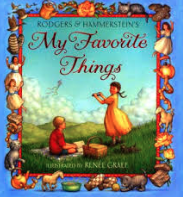
In Part I, I wrote about ways to add musical books to the classroom repertoire. A quick recap:  Choose a song that has been made into a book, like What a Wonderful World or Little White Duck. Since both these books are linked with famous recordings, one extension option includes turning pages while the soundtrack is playing. This works best with songs that are not sung at a breakneck speed, e.g. My Favorite Things. The song is just too fast to turn the pages to, though I would certainly encourage including it as a piece to listen and/or move to. 

Another type of book to look for and sing is one that references a well-known melody. Examples include I Aint’s Gonna Paint No More (It Ain’t Gonna Rain No More), The Aunts Go Marching (The Ants Go Marching), and The Seals on the Bus- one of the many books based on The Wheels of the Bus.  These books wouldn’t work as well, or at all, if they didn’t have a very specific song and melody as their foundation.

But wait, there’s more! Piggybacking Melodies
For books that don’t have their own melody, use a shared, or “piggyback” melody, to carry the text. Many rhyming books for young audiences share a similar syllabic  count.  Try piggybacking books to common melodies including London Bridge, Frere Jacques, Skip To My Lou, Twinkle, etc. Choose whatever melody complements the text best.
http://www.babble.com/pets/pigs-the-piranhas-of-the-farm-world/
Many use this “piggyback” technique already, with no understanding of how/why it works, and what an accessible tool this is. Certainly that was the case with me, until I attended, by chance, the Imagination Education Conference for Everyone! at National Louis University (created by friend, Kristin Lems), and sat in on a children’s books workshop given by author W. Nicola-Lisa.
A chance statement changed forever how I would approach singing (many) children’s books.  At one point, Nicola-Lisa opened an uncut, two-sided galley (for lack of a better word), of one his children’s books to dramatically illustrate the point that children’s book are a certain, standardized, number of pages, due to printing / cutting / binding mechanics.
The galley must have been 8’ x 8’ – or larger, with print and image going in various directions on successive page – and looked like a fabulous quilt!  He cited examples where he had to extend an idea to fit into this format. He claimed that most children’s books were multiples of eight, the most common being 24 or 32 pages. Up to that point, I had never given any thought to the format, structure and pagination of children’s books, but when I got home, I devoted myself to counting the pages of my books – and he was right!

At some point, a connection was made between the number of syllables on each page, and the syllabication of nursery rhymes. To complete the process, I tested my hypothesis on random books, the first being One Red Rooster. There are so many reasons I adore this book besides the rhyming text: Suzette Barbier's illustrations are charming, text is printed in large font, the images are additive, it teaches numbers and colors, the framing device on each page - and more!  To my delight, I discovered the text could be sung to a number of nursery rhyme melodies, including Skip to My Lou and London Bridge. Click on the links below each book to hear it sung.
Skip to My Lou
London Bridge


The Power of Process!
As part of a recent music and literacy workshop I conducted for Illinois Children’s Home and Aid Society at the Mount Prospect Library, attendees tried out this simple strategy of  piggybacking  the text to familiar, child-friendly melodies. I provided picture books from my collection – and all had multiple solutions.

Books for Piggybacking Melodies
1) As a group exercise, I asked the group to compile a list of common children’ songs, then wrote the titles on a whiteboard. In took just a minute or two to come up with this list: Row Your Boat, Happy Birthday, Twinkle, Skinnamarink, Frere Jacques, Oat, Peas, Beans and Barley (one song), London Bridge, The Bear Went Over the Mountain, Oh McDonald Had a Farm, Mary Had a Little Lamb, Shoe Fly, Itsy Bitsy Spider, You Are My Sunshine, Wheels on the Bus, and Skip to My Lou. Only a few of these have known composers.

2) Attendees broke into small groups, chose a book, and had a short period to experiment, choose and  add a melody to the text and practice. They were not limited to the songs on the group’s initial list (above). They also decided whether they wanted their book to be a listening experience, echo/participation, or a bit of both.

Made with Popplet Lite iPad app.

3) Groups took turns singing their books to the gathering and received brief feedback. 

Note:  At the end of the workshop, after introducing additional strategies, I provided my key to the books they sang.  Only a few used the same song solution I used.
*Send me an email, and I’ll be happy to send you the list of books and partner songs I used for this exercise: gardengoddess1@comcast.net.


Books for Piggybacking Melodies

So – what did they come up with? Here’s a sampling of their song solutions. A surprise: The go-to song for most of the books turned out to be Skip to My Lou!

Book                                                                                                Piggyback Melody                       
Me I Am by Jack Prelutsky                                                            Going to Kentucky

Ten Little Fingers and Ten Little Toes                                    If You’re Happy and You Know It
            by Mem Fox                                                                                   

When Winter Comes by Nancy Van Laan                                    Skip to My Lou

NOW IT’S YOUR TURN!
Make list of familiar childhood songs, pick a book, see what works,
and make the magic happen!

Join me in December for Part III – a magical, wintry tale
courtesy of Robert Sabuda and singer-songwriter Joanie Calem.

I am continually inspired by The Children’s Music Network (CMN) community. an international group of socially conscious musicians, educators, librarians, families, songwriters and good people, who “celebrate the positive power of music in the lives of children by sharing songs, exchanging ideas, and creating community.” Please visit CMN, and find a gathering in your region.

©2014 Brigid Finucane  * 847-213-0713 * gardengoddess1@comcast.net
http://prekandksharing.blogspot.com
http://brigidfinucane.blogspot.com
@booksinger1

Blog History


Saturday, October 18, 2014

SINGING A STORY - The Magic of Musical Books, Part I


The following information is adapted from posts on In Harmony – A music education blog from Heritage Music Press. In deference to The Husband, who maintains that blogposts are different than book chapters, I am breaking the information into two parts. You can thank him later. Really. He’d love to be thanked – because that means he’s right.


Hello, everyone. Ms. Brigid here, from Merit School of Music  in Chicago, IL. Thank you for joining me.

An App to Love
Before we get to the main topic of this post, I’d like to share a recently discovered and brilliant app: Freeze Dance.  For a mere $.99, you can select any song in your iTunes library and add pauses – essentially doing away with remotes or lurking next to the CD player when your kiddos are freeze dancing. Users can select Auto Freeze or create customized intervals.  The app is highlighted in Amy M. Burn’s  FREE e-book, Help! I am an elementary music teacher with one or more iPads! 

Full disclosure: This book was was discovered via the 15 Of The Best Music Technology in Education Books web article by Australian, Katie Wardrobe. Her music-tech-education site, Midnight Music, is a treasure trove of great ideas and information. You’ll be happy you took a look!


                  Why Sing a Book?
One of my passions is music and literacy – and a favorite way to share this with students and families is by presenting musical books at the end of class time. When a book is sung, it goes beyond the simple and everyday – it’s elevated into a new and special experience.   A musical book engages, invites positive communal participation, opens teaching opportunities and provides non-stressful (group) pronunciation practice, especially important for the many families and students I work with whose first language is not English.

Music/songs share many elements with the books read in early childhood classrooms. Music/songs/books
·      use symbolic notation,
·      are rhythmic and sequential (there are beginnings, middles, ends)
·      provide vocabulary enrichment,
·      teach tenses and plurals,
·      are rich in poetic language,
·      allow visualization, reflection and
·      encourage good pronunciation. 

Music is also reductive – it gets to the heart of things very quickly.
Shadow Chasers by Elly MacKay. Thank you, S. Hassler!

Depending on the season and concepts I want to reinforce, Books are sung two or three times, and their subject matter reflects the season or concepts highlighted during class. Most books employ audience participation through echoing the text line by line or a chorus. Some books are even vehicles to encourage solo singing.

How to Begin?
1. Find a song that has been turned into a book, and sing it!
The best place to do this is a library. You’ll be amazed what you can find in the children’s section! But wait, there’s more. To add a richer dimension, consider pairing books with the recordings that inspired them, e.g., What a Wonderful World, by George David Weiss & Bob Thiele, Ashley Bryan (illus). The singer that made this song famous was Louis Armstrong.


This brightly illustrated book is filled with positive images of the world and different cultures and is a favorite of those I teach. The story goes that this song was written specifically for Armstrong in the late 1960’s to quell civil unrest, since he was a beloved civil and cultural ambassador. This may or may not be true- but it’s interesting to ponder! After introducing Armstrong and the book, I turn the pages while playing a recording of the song. We don’t stop there. We immediately sing it again – but this without accompaniment.


Another option: After reading the book, use the app, Watchlater,* or another video downloader, to download the YouTube video of Armstrong directly to your iPad or computer. My families love watching this great man sing. He doesn’t play his famous trumpet on this recording, but it’s right there in his hand! *At this writing, Watchlater is still operable, but is in a transition period with the iTunes, due to the recent IOS updates.

There are many more wonderful options to choose from. Here are songs/books that work nicely, all with iconic singers attached:
YouTubes to use: Burl Ives.  The stringed instruments are fantastic.

Danny Kaye’s version is included as a comparative. You’ll either love or hate the background singers!


A, You’re Adorable. Perry Como’s 1949 hit is about how adorable his sweetheart is. For me,  this song/book works far better as song an adult sings to a child.

YouTubes to use: Dean Martin’s recording OR Sesame Street.
YouTubes to use: Julie Andrews’ recording.

The book’s rich illustrations call for slowly turned pages, so this recording may be for listening purposes only! Film clip.


2. Referencing Melodies. 
There are a number of deservedly popular books that reference a well know melody and add or “piggyback” their words onto it. These books wouldn’t works as well, or at all, if they didn’t have a very specific song and melody as their foundation. Let’s take a look at two:
Melody: “It Aint’ Gonna Rain No More.”  This is a great book for colors, patterns, rhyming, body parts….and slightly subversive fun! The illustrations are exceptional (though the little boy is a bit creepy – in an art-is-purely-subjective kind of way).
NOTE: Syllabication is not completely accurate.  Be sure to practice before presenting, and make necessary adjustment.

Melody: “The Ants Go Marching.” “Dressed in raincoats and carrying umbrellas, a platoon of aunts march through the rainy city streets led by a little girl with a drum in this cumulative rhyme.” (cover). Clever illustrations of rapid numeric (aunt) expansion highlight this funny take on this classic childhood song.
Other examples: The Seals on the Bus by Lenny Hort & G. B. Karas (Melody: Wheels on the Bus) and Cows in the Kitchen by A. Anderson (Melody: “Skip to My Lou”).


That’s all for now. Please join me in November for Part II: Piggybacking Melodies.


I am continually inspired by The Children’s Music Network (CMN) community. an international group of socially conscious musicians, educators, librarians, families, songwriters and good people, who “celebrate the positive power of music in the lives of children by sharing songs, exchanging ideas, and creating community.” Please visit CMN, and find a gathering in your region.

©2014 Brigid Finucane  * 847-213-0713 * gardengoddess1@comcast.net
http://prekandksharing.blogspot.com
http://brigidfinucane.blogspot.com
@booksinger1

Blog History: December 2013 – Present


Related Posts Plugin for WordPress, Blogger...